Also on Wikipedia

Search results

NASA Telescope Reveals Largest Batch of Earth-Size, Habitable-Zone Planets Around Single Star

NASA's Spitzer Space Telescope has revealed the first known system of seven Earth-size planets around a single star. Three of these planets are firmly located in the habitable zone, the area around the parent star where a rocky planet is most likely to have liquid water.

The discovery sets a new record for greatest number of habitable-zone planets found around a single star outside our solar system. All of these seven planets could have liquid water – key to life as we know it – under the right atmospheric conditions, but the chances are highest with the three in the habitable zone.


“This discovery could be a significant piece in the puzzle of finding habitable environments, places that are conducive to life,” said Thomas Zurbuchen, associate administrator of the agency’s Science Mission Directorate in Washington. “Answering the question ‘are we alone’ is a top science priority and finding so many planets like these for the first time in the habitable zone is a remarkable step forward toward that goal.”

At about 40 light-years (235 trillion miles) from Earth, the system of planets is relatively close to us, in the constellation Aquarius. Because they are located outside of our solar system, these planets are scientifically known as exoplanets.

This exoplanet system is called TRAPPIST-1, named for The Transiting Planets and Planetesimals Small Telescope (TRAPPIST) in Chile. In May 2016, researchers using TRAPPIST announced they had discovered three planets in the system. Assisted by several ground-based telescopes, including the European Southern Observatory's Very Large Telescope, Spitzer confirmed the existence of two of these planets and discovered five additional ones, increasing the number of known planets in the system to seven.

The new results were published Wednesday in the journal Nature, and announced at a news briefing at NASA Headquarters in Washington.


Using Spitzer data, the team precisely measured the sizes of the seven planets and developed first estimates of the masses of six of them, allowing their density to be estimated.

Based on their densities, all of the TRAPPIST-1 planets are likely to be rocky. Further observations will not only help determine whether they are rich in water, but also possibly reveal whether any could have liquid water on their surfaces. The mass of the seventh and farthest exoplanet has not yet been estimated – scientists believe it could be an icy, "snowball-like" world, but further observations are needed.

"The seven wonders of TRAPPIST-1 are the first Earth-size planets that have been found orbiting this kind of star," said Michael Gillon, lead author of the paper and the principal investigator of the TRAPPIST exoplanet survey at the University of Liege, Belgium. "It is also the best target yet for studying the atmospheres of potentially habitable, Earth-size worlds."

In contrast to our sun, the TRAPPIST-1 star – classified as an ultra-cool dwarf – is so cool that liquid water could survive on planets orbiting very close to it, closer than is possible on planets in our solar system. All seven of the TRAPPIST-1 planetary orbits are closer to their host star than Mercury is to our sun. The planets also are very close to each other. If a person was standing on one of the planet’s surface, they could gaze up and potentially see geological features or clouds of neighboring worlds, which would sometimes appear larger than the moon in Earth's sky.

The planets may also be tidally locked to their star, which means the same side of the planet is always facing the star, therefore each side is either perpetual day or night. This could mean they have weather patterns totally unlike those on Earth, such as strong winds blowing from the day side to the night side, and extreme temperature changes.

Spitzer, an infrared telescope that trails Earth as it orbits the sun, was well-suited for studying TRAPPIST-1 because the star glows brightest in infrared light, whose wavelengths are longer than the eye can see. In the fall of 2016, Spitzer observed TRAPPIST-1 nearly continuously for 500 hours. Spitzer is uniquely positioned in its orbit to observe enough crossing – transits – of the planets in front of the host star to reveal the complex architecture of the system. Engineers optimized Spitzer’s ability to observe transiting planets during Spitzer’s “warm mission,” which began after the spacecraft’s coolant ran out as planned after the first five years of operations. 

"This is the most exciting result I have seen in the 14 years of Spitzer operations," said Sean Carey, manager of NASA's Spitzer Science Center at Caltech/IPAC in Pasadena, California. "Spitzer will follow up in the fall to further refine our understanding of these planets so that the James Webb Space Telescope can follow up. More observations of the system are sure to reveal more secrets.”


Following up on the Spitzer discovery, NASA's Hubble Space Telescope has initiated the screening of four of the planets, including the three inside the habitable zone. These observations aim at assessing the presence of puffy, hydrogen-dominated atmospheres, typical for gaseous worlds like Neptune, around these planets.

In May 2016, the Hubble team observed the two innermost planets, and found no evidence for such puffy atmospheres. This strengthened the case that the planets closest to the star are rocky in nature.

"The TRAPPIST-1 system provides one of the best opportunities in the next decade to study the atmospheres around Earth-size planets," said Nikole Lewis, co-leader of the Hubble study and astronomer at the Space Telescope Science Institute in Baltimore, Maryland. NASA's planet-hunting Kepler space telescope also is studying the TRAPPIST-1 system, making measurements of the star's minuscule changes in brightness due to transiting planets. Operating as the K2 mission, the spacecraft's observations will allow astronomers to refine the properties of the known planets, as well as search for additional planets in the system. The K2 observations conclude in early March and will be made available on the public archive.


NASA’s Jet Propulsion Laboratory (JPL) in Pasadena, California, manages the Spitzer Space Telescope mission for NASA's Science Mission Directorate. Science operations are conducted at the Spitzer Science Center, at Caltech, in Pasadena, California. Spacecraft operations are based at Lockheed Martin Space Systems Company, Littleton, Colorado. Data are archived at the Infrared Science Archive housed at Caltech/IPAC. Caltech manages JPL for NASA.


For more information about Spitzer, visit:
https://www.nasa.gov/spitzer


For more information on the TRAPPIST-1 system, visit:
https://exoplanets.nasa.gov/trappist1

For more information on exoplanets, visit:
https://www.nasa.gov/exoplanets

TASA - 2017

NASA & TRAPPIST-1 : A Treasure Trove of Planets Found | TASA ©2014 -17

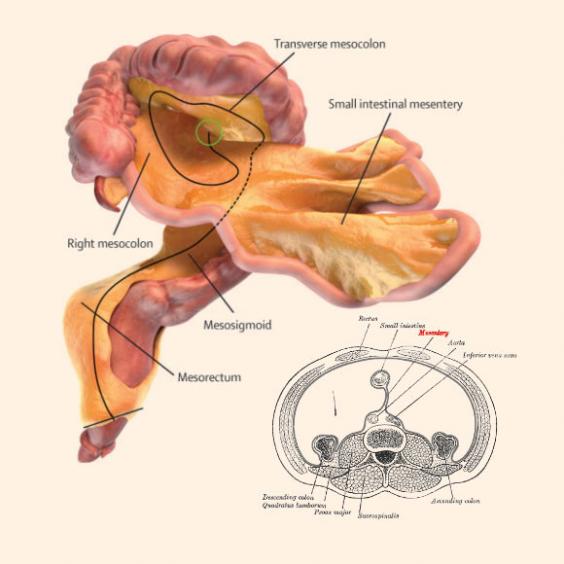
Mesentery : New organ discovered inside human body by scientists (and now there are 79 of them)

      A new organ has been discovered hiding in plain sight inside the human body. Known as the Mesentery, it was previously thought to be just a few fragmented structures in the digestive system. But scientists have realised it is in fact one, continuous organ. Although its function is still unclear, the discovery opens up “a whole new area of science,” according to J Calvin Coffey, a researcher at the University Hospital Limerick who first discovered it. 

     "When we approach it like every other organ… we can categorise abdominal disease in terms of this organ," he said.“Now we have established anatomy and the structure. The next step is the function. If you understand the function you can identify abnormal function, and then you have disease. 

     “Put them all together and you have the field of mesenteric science.” The research has been published in The Lancet medical journal. Following its reclassification, medical students are now being taught that the mesentery is a distinct organ. Gray’s Anatomy, the world’s most famous medical textbook, has been updated to include the new definition. 


     A digital representation of the mesentery and small and large intestines (J Calvin Coffey, D Peter O’Leary, Henry Vandyke Carter). Medical students and researchers can now investigate what role the mesentery might play in abdominal diseases, which it is hoped could ultimately lead to new treatments. The organ is a double fold of peritoneum - the lining of the abdominal cavity - that holds our intestine to the wall of our abdomen. It was described by the Italian polymath Leonardo da Vinci in 1508, but it has been ignored throughout the centuries, until now.

Although there are generally considered to be five organs in the human body, there are in fact now 79, including the mesentery. The heart, brain, liver, lungs and kidneys are the vital organs, but there are another 74 that play a role in keeping us healthy.


  • Post By : TASA

Hubble gazes at a cosmic 'megamaser'


This galaxy has a far more exciting and futuristic classification than most -- it hosts a megamaser. Megamasers are intensely bright, around 100 million times brighter than the masers found in galaxies like the Milky Way. The entire galaxy essentially acts as an astronomical laser that beams out microwave emission rather than visible light (hence the 'm' replacing the 'l').

A megamaser is a process that involves some components within the galaxy (like gas) that is in the right physical condition to cause the amplification of light (in this case, microwaves). But there are other parts of the galaxy (like stars for example) that aren't part of the maser process.

This megamaser galaxy is named IRAS 16399-0937 and is located over 370 million light-years from Earth. This NASA/ESA Hubble Space Telescope image belies the galaxy's energetic nature, instead painting it as a beautiful and serene cosmic rosebud. The image comprises observations captured across various wavelengths by two of Hubble's instruments: the Advanced Camera for Surveys (ACS), and the Near Infrared Camera and Multi-Object Spectrometer (NICMOS).

NICMOS's superb sensitivity, resolution, and field of view gave astronomers the unique opportunity to observe the structure of IRAS 16399-0937 in detail. They found it hosts a double nucleus -- the galaxy's core is thought to be formed of two separate cores in the process of merging. The two components, named IRAS 16399N and IRAS 16399S for the northern and southern parts respectively, sit over 11,000 light-years apart. However, they are both buried deep within the same swirl of cosmic gas and dust and are interacting, giving the galaxy its peculiar structure.


The nuclei are very different. IRAS 16399S appears to be a starburst region, where new stars are forming at an incredible rate. IRAS 16399N, however, is something known as a LINER nucleus (Low Ionization Nuclear Emission Region), which is a region whose emission mostly stems from weakly-ionized or neutral atoms of particular gases. The northern nucleus also hosts a black hole with some 100 million times the mass of the sun!

WELCOME TO JUPITER - JUNO : LIVE UPDATE

  • NASA's Juno Spacecraft in Orbit Around Mighty Jupiter :


     First of all congratulation to NASA. After an almost five-year journey to the solar system’s largest planet, NASA's Juno spacecraft successfully entered Jupiter’s orbit during a 35-minute engine burn. Confirmation that the burn had completed was received on Earth at 8:53 p.m. PDT (11:53 p.m. EDT) Monday, July 4. 


     “Independence Day always is something to celebrate, but today we can add to America’s birthday another reason to cheer -- Juno is at Jupiter,” said NASA administrator Charlie Bolden. “And what is more American than a NASA mission going boldly where no spacecraft has gone before? With Juno, we will investigate the unknowns of Jupiter’s massive radiation belts to delve deep into not only the planet’s interior, but into how Jupiter was born and how our entire solar system evolved.” 
      Confirmation of a successful orbit insertion was received from Juno tracking data monitored at the navigation facility at NASA's Jet Propulsion Laboratory (JPL) in Pasadena, California, as well as at the Lockheed Martin Juno operations center in Littleton, Colorado. The telemetry and tracking data were received by NASA's Deep Space Network antennas in Goldstone, California, and Canberra, Australia. 


     “This is the one time I don’t mind being stuck in a windowless room on the night of the 4th of July,” said Scott Bolton, principal investigator of Juno from Southwest Research Institute in San Antonio. “The mission team did great. The spacecraft did great. We are looking great. It’s a great day.” 
     Preplanned events leading up to the orbital insertion engine burn included changing the spacecraft’s attitude to point the main engine in the desired direction and then increasing the spacecraft’s rotation rate from 2 to 5 revolutions per minute (RPM) to help stabilize it.. 
The burn of Juno’s 645-Newton Leros-1b main engine began on time at 8:18 p.m. PDT (11:18 p.m. EDT), decreasing the spacecraft’s velocity by 1,212 miles per hour (542 meters per second) and allowing Juno to be captured in orbit around Jupiter. Soon after the burn was completed, Juno turned so that the sun’s rays could once again reach the 18,698 individual solar cells that give Juno its energy. 
     “The spacecraft worked perfectly, which is always nice when you’re driving a vehicle with 1.7 billion miles on the odometer,” said Rick Nybakken, Juno project manager from JPL.            “Jupiter orbit insertion was a big step and the most challenging remaining in our mission plan, but there are others that have to occur before we can give the science team the mission they are looking for.” 
      Over the next few months, Juno’s mission and science teams will perform final testing on the spacecraft’s subsystems, final calibration of science instruments and some science collection. 
     “Our official science collection phase begins in October, but we’ve figured out a way to collect data a lot earlier than that,” said Bolton. “Which when you’re talking about the single biggest planetary body in the solar system is a really good thing. There is a lot to see and do here.” 


     Juno's principal goal is to understand the origin and evolution of Jupiter. With its suite of nine science instruments, Juno will investigate the existence of a solid planetary core, map Jupiter's intense magnetic field, measure the amount of water and ammonia in the deep atmosphere, and observe the planet's auroras. The mission also will let us take a giant step forward in our understanding of how giant planets form and the role these titans played in putting together the rest of the solar system. As our primary example of a giant planet, Jupiter also can provide critical knowledge for understanding the planetary systems being discovered around other stars. 
     The Juno spacecraft launched on Aug. 5, 2011 from Cape Canaveral Air Force Station in Florida. JPL manages the Juno mission for NASA. Juno is part of NASA's New Frontiers Program, managed at NASA's Marshall Space Flight Center in Huntsville, Alabama, for the agency’s Science Mission Directorate. Lockheed Martin Space Systems in Denver built the spacecraft. The California Institute of Technology in Pasadena manages JPL for NASA. 


  1. More information on the Juno mission is available at: http://www.nasa.gov/juno
  2. Watch video at: https://youtu.be/0Uayu5LvdTk

  • The US space agency has successfully put a new probe in orbit around Jupiter :


     The Juno satellite, which left Earth five years ago, had to fire a rocket engine to slow its approach to the planet and get caught by its gravity. A sequence of tones transmitted from the spacecraft confirmed the braking manoeuvre had gone as planned. Receipt of the radio messages prompted wild cheering at Nasa's Jet Propulsion Laboratory in Pasadena, California. 
     "All stations on Juno co-ord, we have the tone for burn cut-off on Delta B," Juno Mission Control had announced. "Roger Juno, welcome to Jupiter." 


     Scientists plan to use the spacecraft to sense the planet's deep interior. They think the structure and the chemistry of its insides hold clues to how this giant world formed some four-and-a-half-billion years ago.Engineers had warned in advance that the engine firing was fraught with danger. No previous spacecraft has dared pass so close to Jupiter; its intense radiation belts can destroy unprotected electronics. 
     One calculation even suggested the orbit insertion would have subjected Juno to a dose equivalent to a million dental X-rays. But the probe is built like a tank with titanium shielding, and the 35-minute rocket burn appeared to go off without a hitch. 
"Nasa did it again," said an elated Scott Bolton, Juno's principal investigator. "That says it all to me. And I'm so happy to be part of the team that did that. I mean this team has worked so hard and we have such great people. And it's almost like a dream coming true right here." 

  • FOR MORE INFO VISIT OFFICIAL WEBSITE OF #JUNO ....!!


-: © TASA - 2016 :-

TOP 10 SCIENCE UPDATE OF PREVIOUS MONTH BY TASA


1.  DARPA's O2 Improved Space Surveillance Network Almost Complete :

Stephen Hawking joins futuristic bid to explore outer space (Update)

Yuri Milner said the eventual goal is sending hundreds or thousands of tiny spacecraft, each weighing far less than an ounce, to the Alpha Centauri star system. That's more than 2,000 times as far as any spacecraft has gone so far.Propelled by energy from a powerful array of Earth-based lasers, the spacecraft would fly at about one-fifth the speed of light. They could reach Alpha Centauri in 20 years, where they could make observations and send the results back to Earth. They might discover a planet or planets there—experts think there may be some, but there's no proven sighting yet—and possibly even find signs of life there or elsewhere, said Milner and a panel of experts at the announcement. The three stars that make up Alpha Centauri are the closest stars to our star—the sun.


"We commit to the next great leap into the cosmos," Hawking said, "because we are human and our nature is to fly."


Hawking has joined Milner and Facebook founder Mark Zuckerberg on the board of the project, called Breakthrough Starshot, which includes a team of scientists. Milner said his $100 million will go to establish the feasibility of the project, and that a launch itself would require far more money. Hawking is also part of a project Milner announced last summer to use earthbound telescopes to seek intelligent life in outer space. For the Starshot project, the tiny spacecraft would be boosted into space by a conventional rocket, and then set free individually. They would capture the energy from the earthbound laser array with sails a few yards wide. Milner said recent advances in electronic miniaturization, laser technology and fabrication of extremely thin and light materials have made such a mission realistic to consider.


"We can do more than gaze at the stars," Milner said. "We can actually reach them."


Avi Loeb, chair of Harvard's astronomy department and member of the Starshot project's management and advisory committee, told reporters that scientists have scrutinized the technical obstacles and "we don't see any showstoppers.... We think we can overcome all these challenges." Hawking, of Cambridge University, said the plan fits in with what he said makes humans unique, which is transcending limits.


"With light beams, light sails and the lightest spacecraft ever built, we can launch a mission to Alpha Centauri within a generation," Hawking said.
The project was announced on the 55th anniversary of the flight of Russian Yuri Gagarin, the first human in space. Milner was named after him. Lisa Kaltenegger, an astronomy professor at Cornell University, who is not involved in the project, said in an email, "I think it is inspiring on this date to plan our next journey to the stars."


©TASA-2016

Have Gravitational Waves Been Detected?

LIVE UPDATE @ Laser Interferometer Gravitational Wave Observatory (LIGO) :

Scientists are widely expected to announce the first-ever direct detection of elusive gravitational waves this morning, and you can watch the big moment live.

Researchers affiliated with the Laser Interferometer Gravitational Wave Observatory (LIGO) are holding a news conference today (Feb. 11) at 10:30 a.m. EST (1530 GMT) at the National Press Club in Washington, D.C., and you can watch it live here on Space.com, courtesy of the LIGO consortium. 

Then, at 1 p.m. EST (1800 GMT), the Perimeter Institute for Theoretical Physics in Ontario, Canada, will host its own webcast about the announcement and its implications. Space.com will carry that event live as well, thanks to the Perimeter Institute. [The Search for Gravitational Waves (Gallery)]

Gravitational waves are ripples in the fabric of space-time generated by the acceleration of massive objects. Their existence was first proposed by Albert Einstein in 1916, as part of his famous theory of general relativity. Scientists have found indirect evidence that gravitational waves exist, but a direct detection has proved elusive — until now, apparently. 

Rumors have been swirling for the past several months that the LIGO consortium has spotted gravitational waves — specifically, those generated by the merger of two medium-size black holes. So Thursday’s event is believed to be a discovery announcement, though the LIGO team has remained tight-lipped, referring to the news conference as a "status report on the effort to detect gravitational waves."

Gravitational waves move at the speed of light and do not interact meaningfully with matter. A direct detection would be a huge milestone, allowing researchers to test how general relativity operates under extreme conditions and potentially opening up a new window into the universe, LIGO team members have said.

"Gravitational waves probably won’t be useful in helping us understand processes on the Earth, but they will help us understand processes that occur in outer space, such as the collisions of pairs of black holes," the LIGO team wrote in an online FAQ about the project.

After 100 years of searching, physicists might finally be about to confirm the existence of Einstein's gravitational waves - proving that the path of science rarely runs smoothly... or quickly. 

Physicists at LIGO - one of the observatories that's been manically searching for gravitational waves - have nowcalled a press conference for 10.30am EST on Thursday 11 February (2.30am AEST on Friday 12 February). And if the very well-educated rumours are to be believed, they're going to reveal the first "unambigious" evidence that gravitational waves exist, which is a HUGE deal. You can watch live below, and we'll be live-blogging the entire thing.

Gravitational waves are so exciting because they're the last major prediction of Einstein's general theory of relativity to be confirmed, and discovering them will help us understand how the Universe is shaped by mass.

According to Einstein's theory, the fabric of space-time can become curved by anything massive in the Universe. When cataclysmic events happen, such as black holes merging or stars exploding, these curves can ripple out elsewhere as gravitational waves, just like if someone had dropped a stone in a pond.

Imagine the Universe as a massive pond - by the time those ripples get to us on Earth, they're tiny (around a billionth of the diameter of an atom), which explains why they've been so hard to find.

But rumours are flying in the physics world that LIGO has finally been able to detect them, using a series of lasers bouncing back and forth in two 4-km-long pipes to measure incredibly small changes, and we're so freaking excited to find out more.

The official press conference webcast is for registered media only, but apparently you can watch live on the YouTube stream below, and we'll be updating as the event rolls on... here we go!

Live updates below (keep hitting refresh!):

10am ET: Okay, the countdown is officially on! There's half an hour before the press conference kicks off, and 15 minutes until we have access to it. It's 2am here in Sydney, so apologies in advance for any typos during this live stream - never let a bad time zone get in the way of physics!

10.04am ET: While we're waiting,find out more about what the rumours are saying is going to be announced today - which is the first clear, unambigious evidence that gravitational waves exist (something Einstein predicted 100 years ago). You can also watchthis interview with physicist Lawrence Krauss, who first kicked off the rumours.

10.09am ET: The countdown is showing 6 minutes until we go live. We're excited!

10.14am ET: Here we go, guys. Physics as we know it could be about to change forever...

10.15am ET: "Live stream is starting soon." 

"The knowledge that astronomers gain from measuring gravitational waves could also improve our understanding of space, time, matter, energy and the interactions between all of these things," they added. "In so doing, this field of study could revolutionize humanity’s knowledge and understanding of the nature of existence itself."

LIGO consists of two huge detectors — one in Livingston, Louisiana, and the other in Hanford, Washington. Each detector is an L-shaped system with arms 2.5 miles (4 kilometers) long. A laser beam is directed down these arms; if a gravitational wave passes through the detector, the resulting distortion of space-time will cause the distance traveled by the beam to change by a minuscule amount.

Theoretically, this change would be picked up by the detector. LIGO has two such detectors spaced hundreds of miles apart to help rule out false positives caused by local environmental conditions. (If the same signal is picked up in both Louisiana and Washington, chances are, it’s a real detection.)

LIGO is operated by MIT and the California Institute of Technology, and is funded by the U.S. National Science Foundation.

© TASA-2016

Diborane – B2H6


      If we consider the molecule B2H6 (diborane Figure 1), there are 12 valence electrons at our disposal for chemical bonding (B has 3, and H has 1, so 2xB + 6xH =12). Each terminal B–H bond is a standard vanilla two electron bond, and there are four of these, thus accounting for a total of eight electrons. This leaves a total of four electrons to share between the two bridging H atoms and the two B atoms. Consequently, two B–H–B bridging bonds are formed, each of which consists of two electrons (Figure 2), forming what are called threecenter- two-electron bonds (i.e., 3 atoms share 2 electrons) – sometimes called ‘banana’ bonds, as they are not linear but curved.

Figure 1. The structure of diborane 

Each B atom is, approximately, sp3 hybridized (hybridization is just a mathematical tool, so you can just as easily have s1.05p2.95 hybridized orbitals!), and if we consider just one of the B atoms, two of the four sp3 hybrid orbitals form s bonds to the terminal H atoms (1s orbitals). Tha leaves two B sp3 hybrid orbitals, one of which contains an electron, one of which is empty. For each bridge therefore, one sp3 orbital from each of the B atoms combines (Figure 3) with the 1s orbital of the bridging H atom to form three new molecular orbitals (MOs) – as always, n atomic orbitals (AO) form n MOs. One B atom gives its remaining valence electron to one bridge, and the other B atom gives to the other. Each bridge, therefore, has two electrons, which fill our new MO scheme starting with the lowest energy bonding MO.
Figure 2. The terminal B–H bondsand the bridging B–H–B bonds each contain two electrons


Figure 3. The MO scheme for one of the B–H B bridging three center two electron bonds. *This picture is still a simplification of the actual MO scheme. The non-bonding orbital is actually of slightly lower energy than shown and so has slight bonding character. This arises from the fact that the orbitals involved in the terminal B–H bonding have the correct symmetry to overlap with the bridging bond orbitals, resulting in a stabilization of the ‘nonbonding’ orbital.

Figure 4. One final way of visualizing the bonding in diborane can be done by considering a dianion such as B2H42–, which has the same three-dimensional structure as ethene. There is p-electron density above and below the plane in which all six atoms lie (just like ethene) and so if we imagine embedding a proton in each face of this flat molecule, we balance the charge and arrive at the correct geometric structure.

Email us : click here

IT IS POSSIBLE TO USE YOUR BRAIN CAPACITY 100 % BY CPH4 ???


Average people include me use only 10% of brain capacity by working,learning,moving,socializing,etc.....

What happen if someone reach 100% brain capacity ?

These higher percentages correlate with her brain capacity usage
1) control of the cell;
2) control of others;
3) control of matter;
4) control of time.

A blue crystalline synthetic drug called CPH4 (finction name) that make someone reach 100% brain capacity.
CPH4 is a molecule that the pregnant woman is making it after six weeks of pregnancy. in very - very tiny quantities. And it's true that the power of this product for a baby is the power of an atomic bomb.

Does the C.P.H.4 molecule really exist as shown in the movie Lucy? If so, how does it work?

There is a metabolic enzyme called 6-carboxytetrahydropterin synthase or CPH4 synthase that acts as a catalyst in the following reaction

7,8-dihydroneopterin 3'-triphosphate + H2O <----------------> 6-carboxy-5,6,7,8-tetrahydropterin + acetaldehyde + triphosphate

Where can I find CPH4 ?
So the 10% rule is a complete and total myth. But can a drug like CPH4 improve your brain’s performance? Well first of all, the drug CPH4 doesn’t exist. The blue candy looking drug that is shown in the movie Lucy is completely fake, looking more like a prop from Breaking Bad than something produced in your body. The movie gives the explanation that it’s based on a molecule that helps infants and fetuses ignore the pain caused by growing bones. This does exist, but it has absolutely no connection to CPH4.
There is in fact a molecule known as CPH4 in medical science. Its full name is 6-carboxytetrahydropterin synthase. This is an enzyme found in the cells of millions of organisms, but primarily in bacteria. Enzymes in cells are used to produce other types of molecules that are necessary for the cell to function. The CPH4 enzyme produces Queuosine. Queuosine is a molecule that essentially helps hold the tRNA of bacteria cells together. It’s nothing more than glue for other molecules to stick to each other. It literally has no impact on intelligence or brain capacity (bacteria don’t have brains after all).
As a result of this movie people have taken to selling CPH4 online in an attempt to take advantage of uninformed customers. Do NOT under any circumstances consume anything labeled CPH4. The best case scenario is that you would be taking the literal CPH4 syntheses described above, in which case absolutely nothing positive would happen to your body. The worst case scenario however could be accidentally ingesting something harmful. You don’t know what is being put into these mysterious packages.
Your brain’s capacity is theoretically unknown, and so you can’t simply take a magic drug or pill and expect to become more intelligent or gain instant knowledge about a subject like Scarlett’s character in Lucy. However some true nootropics exist. Real life nootropic drugs allow your brain to use its existing capacity more fully by improving connections within the brain and heightening the speed with which it transfers information. Modafinil is a proven commodity. It improves concentration, increases awareness, and improves short term memory recall. These things will allow you to perform better. There isn’t a drug out there that is going to make you “smarter” in the classic sense of the word, but you CAN increase your day-to-day efficiency with proven products such as Modafinil.
So don’t waste your money or risk your health with a potentially dangerous product being sold as part of a get-rich-quick scheme where you are the victim. Instead, use 100% of your brain and make a smart decision. Buy something that thousands of other people have tried and loved. There is a reason why people continue to buy Modafinil again and again: Because it works. As CPH4 is not yet avaliable, when it available think about what you can do it ?? It's anything, you are anywhere.

© TASA - 2016.

Big Bang, Deflated? Universe May Have Had No Beginning At All


A new theory claims that the universe may not have started with a bang. According to this new study, the universe was not ever a singularity or an infinitely minor and infinitely dense point of matter at all. In actual fact, the universe may have no start at all. Study co-author Saurya Das, a theoretical physicist at the University of Lethbridge, Canada, said "Our theory suggests that the age of the universe could be infinite," This new notion could also clarify what dark matter is actually made of, Das added. According to the Big Bang theory, the universe was born nearly 13.8 billion years ago. All the matter that occurs today was once squeezed into an infinitely dense, infinitely small, ultra-hot dot called a singularity. This little fireball then blasted and growth to the early universe started. This singularity comes from the math of Einstein's theory of general relativity, which defines how mass warps space-time, and from an additional equation (called Raychaudhuri's equation) that foretells whether the route of something will merge or diverge with time. Going backward in time, as claimed by these equations, all matter in the cosmos was once in a tiny single point — which is also known as the Big Bang singularity.

But that's not quite accurate. In Einstein's formulation, the laws of physics essentially break before the singularity is touched. But researchers generalize backward as if the physics equations still hold, states Robert Brandenberger, a theoretical cosmologist at McGill University, who was not the part of this study.

Brandenberger also told Live Science "So when we say that the universe begins with a big bang, we really have no right to say that," There are other difficulties developing in physics — specifically, that the two most leading theories, quantum mechanics and general relativity, can't be merged to come up with single concept. Quantum mechanics states that the actions of tiny subatomic particles are basically uncertain. This against the Einstein's general relativity, which is deterministic, implying that once all the regular laws are identified, the future is entirely preset by the past, Das said. And neither theory clarifies what dark matter, an unseen form of matter that applies a gravitational pull on regular matter but cannot be identified by most telescopes, is actually made of.

Quantum modification

Das and his coworkers wanted a way to solve at least some of these problems. To do so, they considered an older method of picturing quantum mechanics, called Bohmian mechanics. In Bohmian mechanics, an unseen variable rules the strange actions of subatomic particles. Unlike other formulations of quantum mechanics, it offers a way to compute the path of a particle. By utilizing this old-fashioned method of quantum theory, the scientists calculated a small rectification term that may well be comprised in Einstein's theory of general relativity. Then, they figured out what would occur in deep time. So what’s the outcome? In this new formulation, there is no singularity at all, and the universe as we know it is infinitely old.

How to test this theory?

Das said that one way of understanding the quantum correction term in their equation is that it is connected to the density of dark matter, if so, the cosmos could be packed with a superfluid made of theoretical particles, for instance the gravity-carrying particles known as gravitons, or ultra-cold, ghostly particles known as axions. Das also said that One method to test the theory is to look at how dark matter is dispersed in the cosmos and comprehend if it matches the properties of the suggested superfluid

Nevertheless, the new equations are just one way to settle quantum mechanics and general relativity. For example, a portion of string theory acknowledged as string gas cosmology forecasts that the universe once had a long-lasting static period, while other theories forecast there was once a cosmic "recoil," where the universe first contracted till it touched a very small size, then initiated expanding, Brandenberg said.

©TASA-2016

Lunch & back to land of spaceX rocket

Congratulations to NASA on their successful launch and landing.  Oh....wait I'm sorry, there has been a mistake .  Congratulations to SpaceX!!!!!

Everyone's been making incremental steps along the way...  We had the DC-X conducting take-off and landings under rocket power.  There were several other smaller "lander-type" systems by various companies and groups.  SpaceX performed quite a few take-off and landings using their Grasshopper and Falcon research platforms.  And also achieved successful boost-back and landing approaches to a precision landing location, after successfully delivering the 2nd stage into a proper trajectory towards LEO.  Those successes, alone, are no small feat -- even if the final touchdowns were not successful.

Blue Origins achieved the first landing of a rocket from supersonic speeds -- no small feat, either.

And now we have the first successful return of a 1st stage orbital rocket (on an operational mission) to a soft touchdown near the launch site.  Another amazing achievement.

Seriously, folks, there's plenty of acclaim to go around for all of these guys.

©TASA-2015

LHC collides ions at new record energy

LHC restart ..

After the successful restart of theLarge Hadron Collider (L fiths of data taking with proton collisions at a new energy frontier, the LHC is moving to a new phase, with the first lead-ion collisions of season 2 at an energy about twice as high as that of any previous collider experiment. Following a period of intense activity to re-configure the LHC and its chain of accelerators for heavy-ion beams, CERN’s accelerator specialists put the beams into collision for the first time in the early morning of 17 November 2015 and ‘stable beams’ were declared at 10.59am today, marking the start of a one-month run with positively charged lead ions: lead atoms stripped of electrons. The four large LHC experiments will all take data over this campaign, includingLHCb, which will record this kind of collision for the first time. Colliding lead ions allows the LHC experiments to study a state of matter that existed shortly after the big bang, reaching a temperature of several trillion degrees.

Lead ions collide in the ALICE detector 

“It is a tradition to collide ions over one month every year as part of our diverse research programme at the LHC,” said CERN Director-General Rolf Heuer. “This year however is special as we reach a new energy and will explore matter at an even earlier stage of our universe.”

Early in the life of our universe, for a few millionths of a second, matter was a very hot and very dense medium – a kind of primordial ‘soup’ of particles, mainly composed of fundamental particles known as quarks and gluons. In today’s cold Universe, the gluons “glue” quarks together into the protons and neutrons that form bulk matter, including us, as well as other kinds of particles.

“There are many very dense and very hot questions to be addressed with the ion run for which our experiment was specifically designed and further improved during the shutdown,” saidALICE collaboration spokesperson Paolo Giubellino. “For instance, we are eager to learn how the increase in energy will affect charmonium production, and to probe heavy flavour and jet quenching with higher statistics. The whole collaboration is enthusiastically preparing for a new journey of discovery.”

Lead ions collide in the LHCb detector 

Increasing the energy of collisions will increase the volume and the temperature of the quark and gluon plasma, allowing for significant advances in understanding the strongly-interacting medium formed in lead-ion collisions at the LHC. As an example, in season 1 the LHC experiments confirmed the perfect liquid nature of the quark-gluon plasma and the existence of “jet quenching” in ion collisions, a phenomenon in which generated particles lose energy through the quark-gluon plasma. The high abundance of such phenomena will provide the experiments with tools to characterize the behaviour of this quark-gluon plasma. Measurements to higher jet energies will thus allow new and more detailed characterization of this very interesting state of matter.

“The heavy-ion run will provide a great complement to the proton-proton data we've taken this year," said ATLAS collaboration spokesperson Dave Charlton. "We are looking forward to extending ATLAS' studies of how energetic objects such as jets and W and Z bosons behave in the quark gluon plasma.”

Lead ions collide in the ATLAS dectector 

The LHC detectors were substantially improved during the LHC’s first long shutdown. With higher statistics expected, physicists will be able to look deeper at the tantalising signals observed in season 1.

"Heavy flavour particles will be produced at high rate in Season 2, opening up unprecedented opportunities to study hadronic matter in extreme conditions,” saidCMS collaboration spokesperson Tiziano Camporesi. « CMS is ideally suited to trigger on these rare probes and to measure them with high precision. »

For the very first time, the LHCbcollaboration will join the club of experiments taking data with ion-ion collisions.

"This is an exciting step into the unknown for LHCb, which has very precise particle identification capabilities. Our detector will enable us to perform measurements that are highly complementary to those of our friends elsewhere around the ring,” 


©2015-TASA

Extra dimensions, gravitons, and tiny black holes

100 years to Relativity

Why is gravity so much weaker than the other fundamental forces? A small fridge magnet is enough to create an electromagnetic force greater than the gravitational pull exerted by planet Earth. One possibility is that we don’t feel the full effect of gravity  because part of it spreads to extra dimensions. Though it may sound like science fiction, if extra dimensions exist, they could explain why the universe is expanding faster than expected, and why gravity is weaker than the other forces of nature.

A question of scale

In our everyday lives, we experience three spatial dimensions, and a fourth dimension of time. How could there be more? Einstein’s general theory of relativity tells us that space can expand, contract, and bend. Now if one dimension were to contract to a size smaller than an atom, it would be hidden from our view. But if we could look on a small enough scale, that hidden dimension might become visible again. Imagine a person walking on a tightrope. She can only move backward and forward; but not left and right, nor up and down, so she only sees one dimension. Ants living on a much smaller scale could move around the cable, in what would appear like an extra dimension to the tightrope-walker.

How could we test for extra dimensions? One option would be to find evidence of particles that can exist only if extra dimensions are real. Theories that suggest extra dimensions predict that, in the same way as atoms have a low-energy ground state and excited high-energy states, there would be heavier versions of standard particles in other dimensions. These heavier versions of particles – called Kaluza-Klein states – would have exactly the same properties as standard particles (and so be visible to our detectors) but with a greater mass. If CMS orATLAS were to find a Z- or W-like particle (the Z and W bosons being carriers of the electroweak force) with a mass 100 times larger for instance, this might suggest the presence of extra dimensions. Such heavy particles can only be revealed at the high energies reached by theLarge Hadron Collider (LHC).

A little piece of gravity?

Some theorists suggest that a particle called the “graviton” is associated with gravity in the same way as the photon is associated with the electromagnetic force. If gravitons exist, it should be possible to create them at the LHC, but they would rapidly disappear into extra dimensions. Collisions in particle accelerators always create balanced events – just like fireworks – with particles flying out in all directions. A graviton might escape our detectors, leaving an empty zone that we notice as an imbalance in momentum and energy in the event. We would need to carefully study the properties of the missing object to work out whether it is a graviton escaping to another dimension or something else. This method of searching for missing energy in events is also used to look for dark matter or supersymmetric particles.

Microscopic black holes

Another way of revealing extra dimensions would be through the production of “microscopic black holes”. What exactly we would detect would depend on the number of extra dimensions, the mass of the black hole, the size of the dimensions and the energy at which the black hole occurs. If micro black holes do appear in the collisions created by the LHC, they would disintegrate rapidly, in around 10-27 seconds. They would decay into Standard Model or supersymmetric particles, creating events containing an exceptional number of tracks in our detectors, which we would easily spot. Finding more on any of these subjects would open the door to yet unknown possibility.

The Hubble Story


In the Beginning

Since the dawn of civilization, man was limited by his vision and imagination about his understanding of the universe. The telescope enhanced his vision and tempered his pride, as observations by Copernicus, Galileo and Kepler in the 16th and 17th centuries A.D. rebuffed the millennia-old conceit that the Earth is the center of the universe, spearheading the Scientific Revolution.

By the 18th century, the telescope would become the indispensable instrument for investigations of the cosmos. Bigger and better telescopes were built all over the world. Planets, stars, and nebulae which could not be seen by the naked eye were now being routinely noted and logged. Advances in spectroscopy, photography, and photometry increased telescope versatility, sensitivity, and discovery power.

Enter Edwin Hubble

By the turn of the 20th century, most astronomers believed that the observable universe consisted of one galaxy, our Milky Way Galaxy, an oasis of stars, dust, and gas in the vastness of space. However, in 1924, American astronomer Edwin Hubble used the 100-inch Hooker Telescope (see image below) on Mount Wilson near Los Angeles, California, to observe billions of other galaxies besides our own Milky Way, almost all moving away from each other. This suggested that the universe is expanding, unleashing a Pandora's box of seminal inquiries—such as the Big Bang theory—about the possible beginning and end of the universe—issues which are still being debated to this day.

Astronomers like Edwin Hubble (before and after his time), toiled long, frigid nights inside enormous dome-shaped "observatories" pointing their telescopes skyward, yearning for the best possible snapshot of the heavens. However they faced a major obstacle that stood between them and a clear view of the universe: the Earth's atmosphere. The Earth's atmosphere is a fluid, chaotic soup of gas and dust. It blurs visible light, causing stars to twinkle and making it difficult to see faint stars. It hinders or even totally absorbs other wavelengths of light, making observations of such wavelength ranges as infrared, ultraviolet, gamma rays and X-rays difficult or virtually impossible (it is also these properties which protect us from the harmful effect of these rays).

Observatories with the largest of telescopes in various continents have been perched upon mountain tops and away from distracting city lights, from Caucasus Mountains in Europe to the Australian outback, with varying levels of success. Adaptive optics and other image processing techniques have minimized - but not totally eliminated - the effects of the atmosphere.

A Telescope in Space?

In 1923, German scientist Hermann Oberth, one of the three fathers of modern rocketry (Oberth, Robert Goddard and Konstantin Tsiolkovsky), published "Die Rakete zu den Planet engrained" ("The Rocket into Planetary Space"), which mentioned how a telescope could be propelled into Earth orbit by a rocket. In 1946, Princeton astrophysicist Lyman Spitzer wrote about the scientific benefits of a telescope in space, above Earth's turbulent atmosphere.

Following the launch of the Soviet satellite Sputnik in 1957, the fledgling National Aeronautics and Space Administration (NASA) successfully launched two Orbital Astronomical Observatories (OAOs) into orbit. They made a number of ultraviolet observations and provided learning experiences for the manufacture and launch of future space observatories.

The LST - Large Space Telescope
Meanwhile, scientific, governmental, and industrial groups planned the next step beyond the OAO program. Spitzer gathered the support of other astronomers for a "large orbital telescope" and addressed the concerns of its critics. In 1969, the National Academy of Sciences gave its approval for the Large Space Telescope (LST) project, and the hearings and feasibility studies continued.

After Armstrong's "giant leap for mankind" on the moon in 1969, funding for NASA space programs began to dwindle, putting the LST program in jeopardy. LST planners had to design the telescope under budget constraints. A number of downsizing measures were weighed and considered: decrease the size of the primary mirror, the number of scientific instruments, the diameter of the Systems Support Module and the number of spare parts created and tests performed. In 1974, the LST Science Working Group recommended the space telescope carry a large complement of interchangeable instruments. They would have specifications to resolve at least one-tenth of an arcsecond, and have a wavelength range from ultraviolet through visible to infrared light.
The Space Shuttle NASA and its industrial partners—called contractors—brought up the option of developing a vehicle that could achieve orbit and return to earth intact and be reused repeatedly; the concept of the Space Shuttle was born. The Space Shuttle could deploy the LST into space and reel it back for return to Earth.

NASA suggested that the lifetime of the space telescope be fifteen years, which implied that the instruments needed the ability to be replaced on the ground or even serviced in orbit—an ability not afforded to any satellite before or since. Scientists also had to balance the size and quantity of scientific instruments versus their cost. Too many instruments meant financial support was less likely; conversely, instruments of minimal capability would result in the loss of scientific support for the telescope. The European Space Agency (ESA) joined the project in 1975 and provided fifteen percent of the funding of the LST via contribution of the Faint Object Camera (FOC) and the solar arrays. In return, NASA guaranteed at least fifteen percent of telescope time—the amount of time astronomers use the telescope for space observations - to European astronomers. In 1977, Congress approved funding to build one of the most sophisticated satellites ever constructed.

Who Does What?

NASA chose Marshall Space Flight Center in Huntsville, Alabama, as the lead NASA field center for the design, development, and construction of the renamed Space Telescope (ST). Marshall delegated Perkin-Elmer Corporation (now, Hughes Danbury Optical Systems) the task of developing the Optical Telescope Assembly and the Fine Guidance Sensors. Lockheed Missiles and Space Company (now, Lockheed Martin) was selected by Marshall to build the cylindrical casing and the internal support systems (the Support Systems Module) and assembling the telescope together.

NASA chose Goddard Space Flight Center in Greenbelt, Maryland, to be the lead in scientific instrument design and ground control for the space observatory. Scientists were organized into "Instrument Definition Teams" which would translate scientific aims into scientific devices and incorporate them into the space telescope housing. After an announcement was made to the astronomy community, proposals were received and judged, and five devices were selected as the initial instruments that would be aboard the Space Telescope: the Faint Object Camera, the Wide Field/Planetary Camera, the Faint Object Spectrograph, the High Resolution Spectrograph, and the High Speed Photometer.

The Johnson Space Center in Houston, Texas, and the Kennedy Space Center in Florida supplied Space Shuttle support. In all, dozens of contractors, a handful of universities, and several NASA centers, spanning 21 states and 12 other countries worldwide, made the dream of a telescope above the clouds and in space a reality.

In 1983, the Space Telescope Science Institute (STScI) was established at The Johns Hopkins University in Baltimore, Maryland. The staff of STScI evaluated proposals for telescope time and managed the resulting telescope observations. A number of delays stemming from underestimating the costs and engineering requirements of the state-of-the-art telescope caused the launch date to be moved from December 1983 to the second half of 1986. NASA re-examined interfaces, instruments, and assemblies. The building of the Optical Telescope Assembly encountered engineering challenges. Scientific instruments, like the Wide Field/Planetary Camera (WF/PC), underwent redesign, removing weight and redundancy.

Hubble is Born

In regards to the maintenance and upgrading of the space telescope, plans were made to conduct servicing missions in orbit versus returning the telescope to Earth and refurbishing it on the ground. It was an innovative concept that would be even easier on a budget. In the midst of this spirit of renovation, the Space Telescope was renamed the Hubble Space Telescope (HST). By 1985, the telescope was assembled and ready for launch.

However, in 1986 disaster struck. The Challenger accident forced NASA to ground the Space Shuttle fleet for two years. However, these were years well spent by the HST Project. Solar panels were improved with new solar cell technology. The aft shroud was modified to make instrument replacement during servicing easier. Computers and communication systems were upgraded. The HST was subjected to further stress tests in the harsh environments of liftoff and space.

Finally, on April 24, 1990, the Space Shuttle Discovery lifted off from earth with the Hubble Space Telescope nestled securely in its bay. The following day, Hubble was released into space, ready to peer into the vast unknown of space, offering mankind a glimpse upon distant, exotic cosmic shores yet to be described.

For more info :
NASA

©2015-TASA

Protein complex may help explain magnetic sensing in insects and animals


(TASA)—A team of researchers with Peking University, the Chinese Academy of Sciences and Tsinghua University has identified a protein that aligns with a magnetic field when polymerized and coupled with another well known protein. In their paper published in the journal Nature Materials, the researchers suggest the protein complex may be the means by which many insects and animals orient themselves using the Earth's magnetic field.

Scientists have studied animals, such as homing pigeons, that are able to use the Earth's magnetic field to orient themselves, for quite some time, but have yet to uncover the actual mechanism behind the ability. In this new work, the researchers believe they may have found the underlying chemistry, even if they have not been able to connect it directly to magnetic sensing.

The researchers picked up where other research left off—with a light sensing protein called cryptochrome that has been identified in the eyes of some animals–some have suggested it may play a part in magnetic sensing. But, because the protein is not sensitive to magnetism, the team reasoned that it might team up with another protein that is. To find out, they searched the genome of a fruit fly that is known to sense magnetic fields, until they found a gene responsible for creating a protein (called CG8198, which they renamed to MagR) that would respond to iron. They then polymerized that protein and coupled it with cryptochrome and then watched, using a microscope, what happened when iron objects were brought near. The team reports that the protein complex lined up like a needle in a compass.

The researchers acknowledge that their findings do not prove that the protein complex is responsible for magnetic sensing, but suggest it seems possible—if the protein complex lined up inside the eye of a pigeon, for example, it could cause a reaction with other proteins or even cells, that in turn could impact nerve cells. They note that theprotein complex exists in many organisms that have demonstrated magnetic sensing, including in the eyes of pigeons—they are calling on the research community to conduct other studies to determine if removing the complex from magnetic sensing insects or animals, causes them to lose their magnetic sensing abilities, which could indirectly prove that they form the basis for the ability. If such efforts prove fruitful, then the next logical step would be to study the complex further as it exists inside living animals to determine exactly how it works.

Abstract
The notion that animals can detect the Earth's magnetic field was once ridiculed, but is now well established. Yet the biological nature of such magnetosensing phenomenon remains unknown. Here, we report a putative magnetic receptor (Drosophila CG8198, here named MagR) and a multimeric magnetosensing rod-like protein complex, identified by theoretical postulation and genome-wide screening, and validated with cellular, biochemical, structural and biophysical methods. The magnetosensing complex consists of the identified putative magnetoreceptor and known magnetoreception-related photoreceptor cryptochromes (Cry), has the attributes of both Cry- and iron-based systems, and exhibits spontaneous alignment in magnetic fields, including that of the Earth. Such a protein complex may form the basis of magnetoreception in animals, and may lead to applications across multiple fields.

© 2015 : TASA

Data storage in Crystal quartz will change everything !!!

There’s a new type of storage device which many tech corporations have been diving into in secret for the past few years, which Hitachi newly came out with a technology they are developing which is fundamentally a sheet of Quartz Glass, which could possibly save data for up to 300 Million Years!

If you didn’t know anything about storage devices that we at present have, but anything from records, CD’s, USB sticks, magnetic tape, none of these can even lay a finger on this new, very inspiring technology.

“The prototype is made of a square of quartz two centimeters wide and two millimeters thick. It houses four layers of dots that are made with a femtosecond laser, which yields very short pulses of light. The dots represent information in binary form, a standard that should be comprehensible even in the distant future and can be read with a basic optical microscope. Since the layers are embedded, surface erosion would not affect them.”


Now, while this is thrilling, there’s more to it than just that. See, While Hitachi presently has a real produceable thing which they will possibly start marketing once they figure out a simple means of relocating data to say, computers and television, the basic model they have (see picture above) only has the data storage volume somewhat better than a CD.

But that’s not to say that this tech is doomed, simply that it’s young… and even then, some people are by now working on a larger and better thing!

Researchers in the University of Southampton in the UK have been developing an even MORE unbelievable technology. It’s called “Superman” Crystals, and possibly has the storage volume of up to 350 TB, and can last forever!

Below: A graphic depicting a 5D optical storage writing setup: femtosecond laser, spatial light modulator (SLM), Fourier lens (FL), half-wave plates matrix (»/2 M), dichroic mirror, 1.2 NA water immersion objective, silica glass sample, translation stage. (Image: University of Southhampton.


“The researchers used a femtosecond laser, which produces pulses of light in femtoseconds (one quadrillionth, or one millionth of one billionth of a second). The 5D read/write laser can record up to a projected 360 TB/disc data capacity on nano-structured glass proficient of thermal stability up to 1000°C — and an almost unlimited lifetime. The information encoding comes in five dimensions that comprise of the size and orientation in addition to the three dimensional position of these nano-structures.”


It appears Crystals still got some magic after all. And they don’t have to just be in your pocket, they might be the basis for all of our computers in the future. I mean, they are now, but possibly even more so.

The Crystal Skulls

You’ve all heard of the ancient crystal skulls and the stories that they apparently hold a repository of knowledge. Well, the researchers at hitachi may have just revived an ancient advanced technology. It has been said throughout history that the crystal skulls contain ancient knowledge probably dating back to the time of Atlantis, or even further.

Information on a grand scale. The skulls are said to have the answers to human evolution, universal information, planetary information, and most prized of all, humankind’s destiny and true purpose. The legend claims that at a time of great need, the skulls will be found and reunited. The information they deliver will save the human race. The legend forewarns, though, that mankind must be able to accept the knowledge morally and spiritually.

This data can apparently exist forever, enduring great temperatures and hostile conditions without degrading… at least until the sun starts to die and expands to consume the earth, that is.

Hitachi scientist Kazuyoshi Torii said that quartz glass is extremely stable and resilient material, used to make beakers and other instruments for laboratory use. Due to the medium, the chip is waterproof, resilient to many chemicals and unaffected by radio waves. Even more, it can be exposed directly to high temperature flames and heated to 1,832 Fahrenheit for at least two hours without being spoiled.

“We trust data will survive unless this hard glass is broken,” said senior scientist Takao Watanabe.


Rather than storing precious information for mankind in an ordinary piece of quartz that could have been lost in time, the ancients chose to store their wisdom in a vessel shaped like a human head. These would be used in many rituals and ceremonies, and passed down from generation to generation. In the same way that our human skull guards and holds the brain, a crystal skull is a mind-like container that holds a generational library of knowledge – from ancient history to a blueprint of possible futures.